Human Anatomy & Physiology Laboratory Manual, 13th Edition: Overview
This manual, authored by Marieb, provides a comprehensive, hands-on learning experience. It includes dissection exercises, histology, and detailed system-by-system coverage,
with a 2022 publication date and a cat version available as a PDF ebook for affordable student access.
The 13th edition of the Human Anatomy & Physiology Laboratory Manual, penned by Elaine Nicpon Marieb, serves as a vital companion for students embarking on their journey through the complexities of the human body. This manual is meticulously designed to complement any anatomy and physiology lecture course, offering a robust platform for practical application of theoretical concepts.
It’s a resource brimming with engaging laboratory activities, ranging from microscopic observations of tissues (histology) to detailed dissections of various organ systems. Students will find comprehensive coverage, starting with foundational elements like microscopy and cell structure, and progressing through each bodily system – integumentary, skeletal, muscular, nervous, and beyond.
Notably, a “Cat Version” is readily available in PDF format, offering a cost-effective alternative for students seeking accessible learning materials. The manual’s enduring popularity is evidenced by its continued relevance and availability through platforms like the Internet Archive and student ebook hubs, ensuring widespread access to quality anatomical education.
Target Audience & Course Level
This laboratory manual is primarily geared towards undergraduate students enrolled in introductory anatomy and physiology courses, typically at the college or university level. It’s ideally suited for those pursuing degrees in fields like nursing, allied health professions, biology, and pre-med tracks. The 13th edition caters to both one-semester and two-semester A&P courses, offering flexibility in curriculum integration.
The manual’s content assumes a foundational understanding of basic biological principles, but is structured to progressively build knowledge and skills. Students benefit from a hands-on approach, reinforcing lecture material through practical exercises; The availability of a digital PDF version, particularly the “Cat Version”, broadens accessibility for diverse learners and learning environments.
Instructors frequently utilize the accompanying review sheets and quizzes, alongside Mastering A&P integration, to assess student comprehension. The manual’s design supports a range of teaching methodologies, fostering a deeper understanding of human anatomy and physiology.
Key Features of the 13th Edition
The 13th edition of this manual boasts several enhancements designed to optimize the learning experience. A prominent feature is the availability of a complete digital eBook in PDF format, offering instant download and permanent access – a cost-effective solution for students. The “Cat Version” provides specific dissection guidance, catering to courses utilizing feline specimens.
Updated content reflects current advancements in the field, ensuring accuracy and relevance. Integrated review sheets and quizzes, often compatible with Mastering A&P, facilitate self-assessment and knowledge reinforcement.
The manual emphasizes practical application through detailed dissection procedures and microscopy exercises. Furthermore, online resources and digital tools complement the printed material, providing interactive learning opportunities. This edition maintains a strong focus on safety protocols within the laboratory setting, ensuring a secure learning environment.
System-by-System Coverage
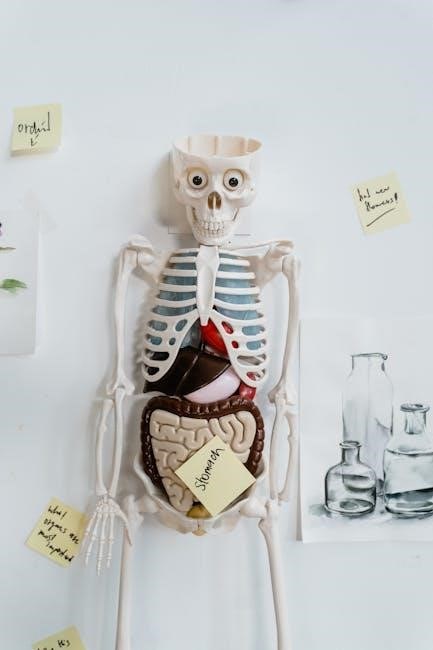
This manual meticulously explores each body system, including integumentary, skeletal, muscular, nervous, endocrine, circulatory, respiratory, digestive, and urinary systems, with reproductive system details.
The Integumentary System
The integumentary system chapter within the 13th edition laboratory manual provides a foundational understanding of the skin and its appendages. Students will delve into the structure and function of the epidermis and dermis, exploring the various layers and cell types that comprise this vital protective barrier.
Practical exercises focus on identifying skin structures under microscopic examination, utilizing histology techniques to differentiate between thick and thin skin. The manual guides students through the examination of hair follicles, sebaceous glands, and sweat glands, emphasizing their roles in thermoregulation and protection.
Furthermore, the lab activities cover wound healing processes and the effects of aging on the skin; Review sheet questions, potentially integrated with Mastering A&P, reinforce key concepts and assess comprehension of this crucial system’s anatomy and physiology. This section prepares students for advanced studies in dermatology and related fields.
The Skeletal System
The skeletal system section of the 13th edition manual emphasizes both anatomical structure and functional classification of bones. Students will engage in extensive bone identification exercises, learning to distinguish between long, short, flat, and irregular bone types. Practical labs focus on recognizing specific bone markings – processes, foramina, and fossae – crucial for articulation and muscle attachment.
The manual guides students through the study of the axial and appendicular skeletons, utilizing skeletal models and diagrams. Histological examination of bone tissue reveals osteon structures and the cellular components responsible for bone remodeling.
Exercises also cover joint classifications and movements, linking skeletal anatomy to physiological function. Review sheets, potentially supplemented by Mastering A&P, assess understanding of bone names, features, and their roles in support, protection, and movement. This section builds a strong foundation for understanding musculoskeletal interactions.
Bone Identification & Classification
This lab component of the 13th edition manual centers on mastering bone nomenclature and categorization. Students will meticulously identify specific bones within both the axial and appendicular skeletons, utilizing provided models and diagrams. A key focus is differentiating bone classifications: long bones (like the femur), short bones (carpals), flat bones (skull), irregular bones (vertebrae), and sesamoid bones (patella).
The manual guides students to recognize key anatomical landmarks – processes, tubercles, foramina, and fossae – on each bone, understanding their functional significance for muscle attachment and articulation.
Practical exercises involve assembling skeletal structures and correctly labeling bone features. Review sheet questions, potentially integrated with Mastering A&P, reinforce learning and assess the ability to accurately classify bones based on shape and function, solidifying foundational knowledge.
The Muscular System
The 13th edition’s muscular system section delves into the intricacies of muscle tissue and function. Students will explore the three primary muscle tissue types – skeletal, smooth, and cardiac – examining their histological characteristics under the microscope. Emphasis is placed on understanding the structural hierarchy, from muscle fibers to fascicles and ultimately, the whole muscle.
Laboratory exercises focus on identifying major skeletal muscles on anatomical models and diagrams, learning their origins, insertions, actions, and innervation.
The manual facilitates understanding of muscle contraction mechanisms and different types of muscle contractions (isotonic, isometric). Review sheets and potential Mastering A&P integration assess comprehension of muscle anatomy, physiology, and the principles governing movement, providing a robust learning experience.
Muscle Tissue Types & Function
This section of the 13th edition laboratory manual provides a detailed exploration of the three muscle tissue types: skeletal, smooth, and cardiac. Students will analyze histological slides to differentiate these tissues based on cellular structure, striations, and nuclei arrangement.
The manual emphasizes the unique functional characteristics of each type. Skeletal muscle, responsible for voluntary movement, is examined in relation to its contractile properties and role in locomotion. Smooth muscle, found in internal organs, is studied for its involuntary control and sustained contractions.
Cardiac muscle, exclusive to the heart, is analyzed for its rhythmic contractions and specialized intercellular junctions. Laboratory activities reinforce understanding of muscle physiology, including excitation-contraction coupling and the role of key proteins like actin and myosin.
The Nervous System
The 13th edition’s Nervous System section delivers a comprehensive exploration of neural anatomy and physiology. Students will delve into the organization of the central and peripheral nervous systems, utilizing detailed diagrams and illustrations from the manual.
A key component is the brain dissection and neuroanatomy study. This hands-on experience allows for identification of major brain regions, including the cerebrum, cerebellum, and brainstem, correlating structure with function.
The manual guides students through examining spinal cord histology and identifying nerve pathways. Activities focus on understanding nerve impulse transmission, synaptic function, and the role of neurotransmitters. Review sheets, potentially integrated with Mastering A&P, reinforce learning and assess comprehension of complex neurological concepts.
Brain Dissection & Neuroanatomy
This section of the 13th edition manual provides a detailed, hands-on approach to understanding the brain’s complex structure. Students engage in a brain dissection, meticulously identifying key anatomical landmarks like the cerebrum, cerebellum, and brainstem.
The manual guides users in correlating these structures with their specific functions, enhancing comprehension of neurological processes. Illustrations and diagrams aid in visualizing intricate pathways and regions.
Neuroanatomy studies focus on identifying cranial nerves and tracing their pathways. Students analyze the organization of the brain, exploring the roles of different lobes and cortical areas. Review sheet questions, potentially utilized within Mastering A&P, assess understanding of spinal cord anatomy and nerve function, solidifying learning through practical application.
The Endocrine System
The 13th edition’s coverage of the endocrine system delivers a thorough exploration of hormone function and regulation. This section details the major endocrine glands – pituitary, thyroid, adrenals, pancreas, and gonads – and their respective hormone secretions.
Laboratory exercises focus on understanding how hormones impact physiological processes. Students analyze the mechanisms of hormone action, including receptor binding and signal transduction pathways.
The manual likely incorporates activities to investigate feedback loops that maintain hormonal homeostasis. It provides a foundation for understanding endocrine disorders and their clinical implications. Review sheets, potentially integrated with Mastering A&P, reinforce learning through targeted questions, ensuring students grasp the intricate relationship between endocrine glands and overall body function.
The Circulatory System
The circulatory system chapter within the 13th edition manual provides a detailed examination of blood, the heart, and blood vessels. Students will explore the components of blood – plasma, red blood cells, white blood cells, and platelets – and their functions in transport, immunity, and clotting.
A key component is hands-on blood analysis, allowing students to determine blood types and analyze hematocrit levels. Heart dissection offers a unique opportunity to visualize the heart’s anatomy and understand its pumping mechanism.
The manual likely covers blood pressure regulation, cardiac output, and the pathways of systemic and pulmonary circulation. Review sheets and Mastering A&P integration will solidify understanding of cardiovascular physiology and pathology, preparing students for advanced concepts.
Blood Analysis & Heart Dissection
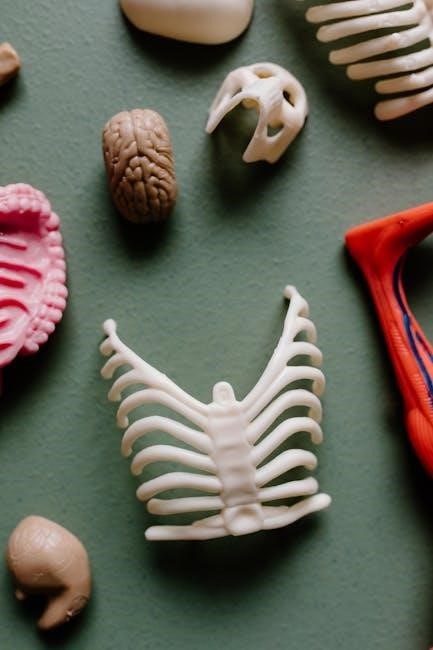
The 13th edition’s circulatory system lab emphasizes practical skills through blood analysis and heart dissection. Blood analysis exercises likely involve determining blood types using simulated or prepared samples, alongside hematocrit and differential white blood cell counts.
Students will gain experience with microscopy to identify blood cells and understand their roles in immunity and oxygen transport. Heart dissection provides a three-dimensional understanding of cardiac anatomy, including chambers, valves, and major vessels.
The manual guides students through careful dissection techniques, emphasizing proper identification of structures. Review sheet questions, potentially integrated with Mastering A&P, reinforce anatomical knowledge and physiological function. These labs are crucial for visualizing and comprehending cardiovascular processes.
The Respiratory System
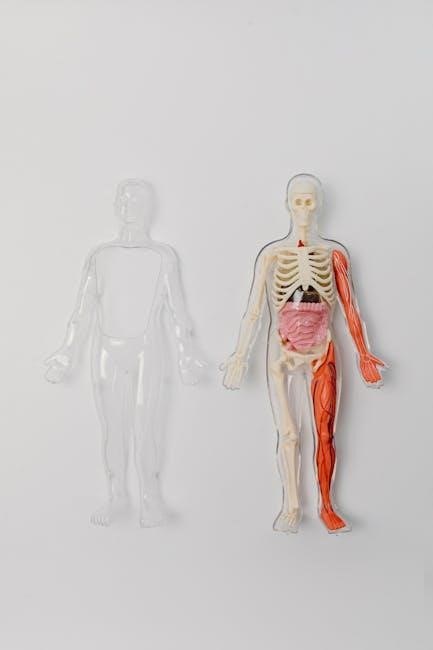
The 13th edition’s respiratory system section focuses on anatomical structures and functional mechanics of breathing. Students will likely explore the pathway of air, from the nasal cavity to the alveoli, through detailed diagrams and models.
Labs may involve examining lung tissues under a microscope to identify alveolar structure and understand gas exchange. The manual likely guides students through identifying key structures like the trachea, bronchi, and diaphragm.
Practical exercises could include measuring lung capacities using spirometers, demonstrating the principles of tidal volume and vital capacity. Review sheets and potential Mastering A&P integration will reinforce understanding of respiratory physiology and common pathologies. This section builds a solid foundation for understanding gas exchange and homeostasis.
The Digestive System
The 13th edition’s coverage of the digestive system emphasizes both macroscopic anatomy and microscopic histology of digestive organs. Students will likely trace the alimentary canal, from the mouth to the anus, identifying key structures like the esophagus, stomach, small intestine, and large intestine.
A core component is likely Digestive Organ Dissection, providing hands-on experience with organ identification and structural relationships. Histological studies will focus on tissue layers – mucosa, submucosa, muscularis externa, and serosa – within different digestive regions.
Labs may include examining digestive enzymes and their role in breaking down macromolecules. Review sheets and Mastering A&P integration will reinforce understanding of digestive processes, absorption, and related pathologies. This section aims to build a comprehensive understanding of nutrient processing and waste elimination.
Digestive Organ Dissection
The Digestive Organ Dissection component, central to the 13th edition, provides invaluable hands-on experience. Students will meticulously dissect various organs – stomach, small and large intestines, liver, pancreas – to visualize anatomical structures firsthand.
Dissection exercises focus on identifying key features like rugae in the stomach, villi and microvilli in the small intestine, and the appendix within the large intestine. Careful observation of tissue layers – mucosa, submucosa, muscularis externa, and serosa – is crucial.
The manual guides students through proper dissection techniques and emphasizes safety protocols. Detailed diagrams and illustrations accompany the procedures, aiding in accurate identification. This practical experience solidifies understanding of digestive system anatomy and functional relationships, complementing theoretical knowledge.
The Urinary System
The Urinary System chapter within the 13th edition laboratory manual delivers a focused exploration of kidney structure and function. Students will investigate the kidneys, ureters, urinary bladder, and urethra, learning their roles in filtration, reabsorption, and waste excretion.
Laboratory activities include identifying kidney structures – cortex, medulla, pyramids, renal pelvis – through models and histological slides. Analysis of urine samples provides practical insight into kidney health and metabolic processes.
The manual details the nephron’s anatomy, emphasizing the glomerulus, Bowman’s capsule, and tubules. Students will trace the path of filtrate through the nephron, understanding the mechanisms of urine formation. This section reinforces the critical link between anatomy and physiological processes, essential for comprehending overall body homeostasis.

Laboratory Techniques & Tools
The manual emphasizes essential skills like microscopy, dissection, and histology. It provides detailed safety protocols and guides students through effective lab procedures for optimal learning.
Microscopy & Histology
This section of the laboratory manual provides a foundational understanding of microscopic anatomy and histological techniques. Students will learn the proper use of the microscope, a crucial tool for visualizing cells and tissues. The manual details how to prepare slides, focus the microscope effectively, and identify various cellular structures.
Histology is explored through the examination of basic tissue types – epithelial, connective, muscle, and nervous. Students will practice identifying these tissues under the microscope, correlating their structure with their specific functions within the human body. The manual likely includes exercises focusing on recognizing key features of each tissue type, aiding in their differentiation.
Review Sheet questions, potentially integrated with Mastering A&P, reinforce learning and assess comprehension. These exercises help students solidify their understanding of microscopic anatomy and histological principles, preparing them for more advanced studies in anatomy and physiology.
Using the Microscope Effectively
This section of the manual provides detailed instructions on mastering the microscope, a cornerstone of anatomical study. Students will learn proper handling, setup, and maintenance procedures to ensure optimal performance and longevity of the instrument. Emphasis is placed on understanding the function of each component – ocular lens, objective lenses, stage, and illumination system.
The manual guides students through the process of preparing wet mounts and stained slides for observation. Techniques for focusing, adjusting magnification, and achieving optimal image clarity are thoroughly explained. Students will learn to troubleshoot common issues, such as uneven illumination or blurry images, to obtain clear and accurate microscopic views.
Practical exercises likely involve observing prepared slides of various tissues and cells. This hands-on experience reinforces theoretical knowledge and develops essential skills for histological analysis, crucial for understanding the microscopic structure of the human body.
Dissection Procedures
The laboratory manual dedicates significant attention to dissection, a vital component of anatomical understanding. Detailed, step-by-step instructions guide students through dissections of various organs and systems, likely including the heart and digestive organs, as referenced in the provided information. These procedures are designed to reinforce theoretical knowledge with practical application.
Emphasis is placed on proper technique, careful observation, and accurate identification of anatomical structures. Students will learn to use dissection tools safely and effectively, minimizing damage to tissues while maximizing visibility. The manual likely includes detailed diagrams and illustrations to aid in identification.
Safety protocols are paramount, and the manual will undoubtedly outline these extensively. Students are expected to follow all guidelines to ensure a safe and respectful learning environment during dissection exercises, fostering a deeper appreciation for anatomical complexity.
Safety Protocols in the Lab
The 13th edition laboratory manual prioritizes a secure learning environment, dedicating a section to comprehensive safety protocols. These guidelines are crucial for minimizing risks associated with handling biological materials, chemicals, and dissection tools. Students are expected to adhere strictly to all outlined procedures.
Protocols likely cover proper handling and disposal of specimens, including those used in dissection exercises. This includes guidelines for preventing contamination and ensuring responsible waste management. The manual will emphasize the importance of personal protective equipment (PPE), such as gloves and eye protection.
Emergency procedures, including first aid and reporting protocols, are also detailed. Students will learn how to respond effectively to accidents or incidents that may occur in the lab, ensuring a swift and appropriate response to maintain a safe and productive learning atmosphere.
Supplemental Materials & Resources
The manual is enhanced with review sheets, quizzes, and Mastering A&P integration. Online resources and digital tools further support learning, offering a comprehensive educational experience.
Review Sheets & Quizzes
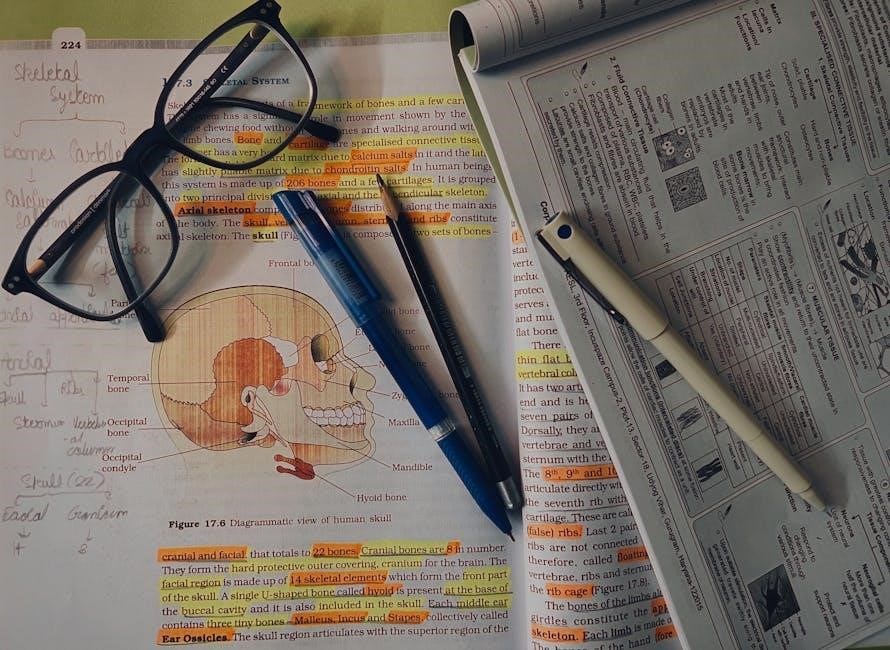
Comprehensive review sheets are a cornerstone of the 13th edition’s learning support system. These sheets meticulously reinforce the concepts explored in each laboratory exercise, prompting students to actively recall and apply their knowledge. They cover anatomical structures, physiological processes, and experimental results, ensuring a thorough understanding of the material.
Furthermore, integrated quizzes provide a valuable self-assessment tool. These quizzes are designed to test students’ comprehension and identify areas requiring further study. Instructors can also utilize portions of these review sheet questions within the Mastering A&P platform, creating a seamless integration between laboratory work and online assessment.
Specifically, examples include review sheets focusing on the spinal cord and spinal nerves, requiring students to match anatomical features and understand their functions. This combination of review sheets and quizzes fosters a deeper, more lasting grasp of human anatomy and physiology.
Mastering A&P Integration
The 13th edition seamlessly integrates with Mastering A&P, a powerful digital learning platform designed to enhance student understanding and performance. This integration provides a dynamic learning environment, extending beyond the traditional laboratory experience. Instructors can assign review sheet questions from the laboratory manual directly within Mastering A&P, creating a cohesive assessment strategy.
This digital component offers a wealth of interactive resources, including practice quizzes, animations, and virtual labs. Students benefit from personalized feedback and targeted support, allowing them to focus on areas where they need the most improvement. The platform’s adaptive learning technology adjusts to each student’s pace and skill level.
By combining the hands-on experience of the laboratory manual with the digital power of Mastering A&P, students achieve a more comprehensive and effective learning outcome, solidifying their grasp of anatomical and physiological principles.
Online Resources & Digital Tools
Numerous online resources complement the 13th edition laboratory manual, extending learning beyond the physical lab space. Students can access a wealth of digital tools to reinforce concepts and enhance their understanding of human anatomy and physiology. The availability of the manual as a PDF ebook facilitates convenient access on various devices, promoting flexible study habits.
Platforms like the Internet Archive offer access to the manual, while student ebook hubs provide affordable digital copies. Reddit communities, such as r/AnatomyandPhysiology and r/FreeTextBook, often discuss and share resources related to the manual, fostering peer-to-peer learning.
These digital tools, combined with the manual’s content, create a dynamic and accessible learning experience. Students can leverage online quizzes, review sheets, and interactive exercises to master complex anatomical structures and physiological processes, ultimately improving their academic performance.