Manual Moulding Machine: A Comprehensive Overview (April 21‚ 2026)
Manual moulding machines remain vital for small-scale production and custom designs‚ offering a cost-effective solution despite lower rates and higher labor needs.
Manual injection moulding machines represent a foundational technology in plastics processing‚ characterized by operator-driven control over the entire moulding cycle. Unlike automated systems‚ these machines require direct human intervention for each step – from material preparation and loading to the injection‚ cooling‚ and ejection phases.
They are particularly well-suited for prototyping‚ short production runs‚ and the creation of highly customized plastic components where flexibility outweighs the need for high-volume output. Despite advancements in automated systems‚ manual machines continue to hold relevance due to their simplicity and lower initial investment.
Historical Context of Manual Moulding
Manual moulding predates the advent of automated injection moulding‚ emerging in the early days of plastics processing as a pioneering method for shaping thermoplastic materials. Initially‚ these machines were rudimentary‚ relying heavily on manual force and skill to operate.
Over time‚ designs evolved‚ incorporating hydraulic systems to assist with injection pressure‚ yet retaining the core principle of operator control. The rise of automated systems didn’t eliminate manual machines; instead‚ they found a niche in specialized applications demanding adaptability and cost-effectiveness.
Applications of Manual Moulding Machines
Manual moulding machines excel in scenarios requiring low-volume production runs‚ prototyping‚ and the creation of highly customized plastic components. They are frequently utilized for producing intricate parts where tooling changes are frequent‚ offering flexibility that automated systems struggle to match.
Applications span diverse industries‚ including crafting small electronic enclosures‚ specialized medical devices‚ and bespoke parts for research and development‚ proving invaluable where precision and adaptability are paramount.

Types of Manual Moulding Machines
Manual injection moulding machines are categorized as horizontal‚ vertical‚ or alternative horizontal column types‚ with options like servo-hydraulic or fully electric systems.
Horizontal Column Type Machines
Horizontal column type machines feature an injection moulding machine where the total distance line of injection is parallel to the ground. This configuration is a fundamental design in manual moulding‚ offering a stable and accessible platform for operators. These machines are often favored for their straightforward operation and ease of maintenance‚ making them suitable for smaller production runs and diverse material processing. The horizontal layout provides convenient access to the mould and injection unit‚ simplifying material loading and part removal. They represent a classic approach to plastic component manufacturing‚ balancing simplicity with functional capability.
Vertical Column Type Machines
Vertical column type machines present a distinct configuration where the injection moulding axis is perpendicular to the ground. These machines are increasingly popular‚ with variations including servo-hydraulic‚ VDP hydraulic‚ fixed pump hydraulic‚ and emerging fully electric options. They are often utilized for insert moulding and applications requiring precise alignment. Compact benchtop and mini pneumatic vertical machines cater to specialized needs‚ like PVC data or USB cable production. This design optimizes floor space and offers enhanced operator access for specific moulding tasks.
Horizontal Column Type (Alternative Classification)
Horizontal column type machines‚ as a classification‚ define a configuration where the injection moulding axis runs parallel to the installation datum. This arrangement is a fundamental design in manual moulding‚ alongside vertical and other horizontal variations. Manufacturers offer diverse models to meet specific customer requirements. These machines are often chosen for their accessibility and suitability for a wide range of plastic components. Understanding this classification aids in selecting the appropriate machine for particular production needs and material types.
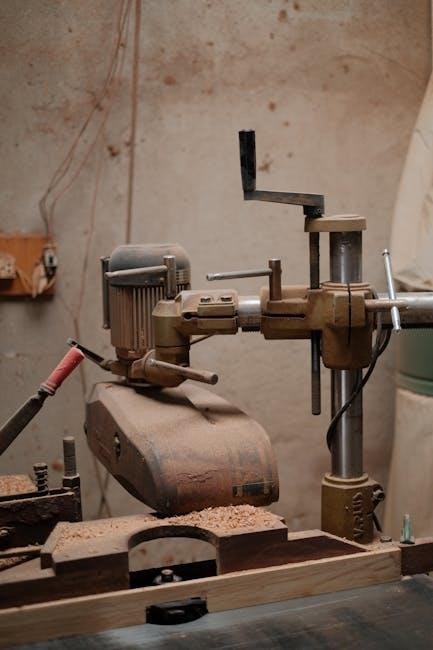
Key Components of a Manual Moulding Machine
Essential components include the injection unit‚ clamping unit‚ and heating system‚ all manually operated to control plastic flow‚ pressure‚ and temperature effectively.
Injection Unit Components
The injection unit in a manual machine fundamentally comprises the hopper‚ screw‚ and nozzle. The hopper holds the plastic material‚ feeding it into the screw. This screw‚ rotated manually‚ plasticizes the material through friction and heat.
The plasticized material is then forced through the nozzle directly into the mould cavity. Precise manual control over screw rotation speed and pressure is crucial for consistent material delivery.
These components‚ while simple‚ demand operator skill to achieve optimal melting‚ pressure‚ and injection timing for quality parts.
Clamping Unit Components
The clamping unit securely holds the mould halves together during the injection process. Key components include the platen – both fixed and movable – tie bars‚ and the clamping mechanism itself‚ typically manually operated via a toggle system or screw.
Applying sufficient clamping force is critical to counteract the injection pressure‚ preventing flash and ensuring part dimensional accuracy.
Operator control over clamping pressure is essential‚ as excessive force can damage the mould‚ while insufficient force leads to defects.
Heating System and Temperature Control
Manual moulding machines typically employ resistance heaters embedded within the barrel to melt the plastic material. Precise temperature control is paramount for consistent material flow and part quality‚ though often less sophisticated than automated systems.
Operators manually adjust heating zones along the barrel‚ monitoring temperatures with thermocouples and making adjustments based on material specifications and observed melt characteristics.
Maintaining consistent temperatures is crucial‚ requiring diligent monitoring and adjustment throughout the production run.
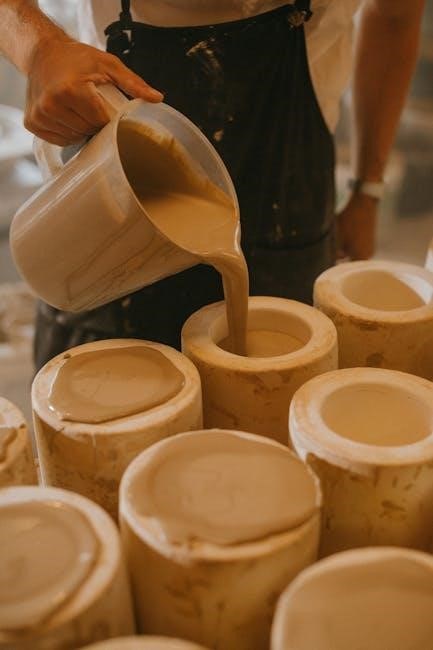
The Manual Injection Moulding Process: Step-by-Step
Manual injection moulding involves operator-controlled material preparation‚ injection‚ cooling‚ and ejection‚ demanding skill to ensure quality plastic component production.
Material Preparation and Loading
Material preparation is crucial for successful manual injection moulding. This begins with selecting the appropriate plastic resin – PVC‚ for example – based on the desired product characteristics. The resin‚ often in pellet form‚ must be thoroughly dried to prevent defects during the injection phase.
Loading the material into the injection unit is a manual process‚ requiring the operator to carefully feed the pellets into the hopper. Precise control over material quantity is essential to avoid overfilling or underfilling the injection chamber‚ impacting part quality and consistency. Proper material handling prevents contamination and ensures optimal processing conditions.
Injection Phase – Manual Operation
The injection phase in a manual machine relies entirely on the operator’s skill and control. After material loading‚ the operator manually activates the injection unit‚ applying force to the piston or screw. This forces the molten plastic through the nozzle and into the mould cavity.
Maintaining consistent pressure and speed during injection is paramount‚ requiring experience and precision. Operators carefully monitor the filling process‚ adjusting parameters as needed to ensure complete mould filling and minimize defects. This manual control distinguishes these machines‚ demanding attentive operation for quality parts.
Cooling and Solidification
Following the injection phase‚ the molten plastic within the mould cavity undergoes cooling and solidification. This crucial step determines the final part’s dimensional accuracy and structural integrity. Manual machines typically rely on natural cooling or‚ in some cases‚ simple water channels integrated into the mould design.
Cooling time varies based on material type‚ part thickness‚ and mould temperature. Operators must carefully manage this phase to prevent warping or shrinkage. Once solidified‚ the part is ready for ejection‚ completing the manual injection moulding cycle.

Advantages of Using Manual Moulding Machines
Manual machines excel in cost-effectiveness for small production runs and offer flexibility for customized designs‚ alongside simplicity and easy upkeep.
Cost-Effectiveness for Small Runs
Manual moulding machines present a significantly lower initial investment compared to automated systems‚ making them ideal for businesses with limited capital. This affordability extends to tooling costs‚ as simpler moulds can often suffice for smaller production volumes.
Furthermore‚ the reduced reliance on complex programming and sophisticated control systems translates to lower operational expenses. For prototyping‚ short production runs‚ or specialized parts where volume isn’t a primary concern‚ manual machines deliver a compelling return on investment‚ avoiding the financial burden of extensive automation.
Suitability for Customized Designs
Manual moulding machines excel in producing highly customized plastic components‚ offering flexibility unmatched by automated systems. The operator’s direct control allows for quick adjustments and iterative improvements during the moulding process‚ crucial for prototyping and specialized parts.
This hands-on approach facilitates experimentation with different materials and mould designs without extensive reprogramming. For low-volume‚ bespoke projects demanding unique geometries or material combinations‚ manual machines provide a practical and efficient manufacturing solution‚ catering to niche market demands effectively.
Simplicity and Ease of Maintenance
Manual moulding machines boast a relatively simple mechanical design compared to their automated counterparts‚ translating to easier maintenance and reduced downtime. Fewer complex components mean fewer potential failure points and a lower demand for specialized technicians.
Routine maintenance tasks are generally straightforward‚ often involving basic lubrication and inspection. This simplicity makes them ideal for workshops with limited resources or expertise‚ minimizing operational costs and maximizing uptime for small-scale production runs and customized projects.
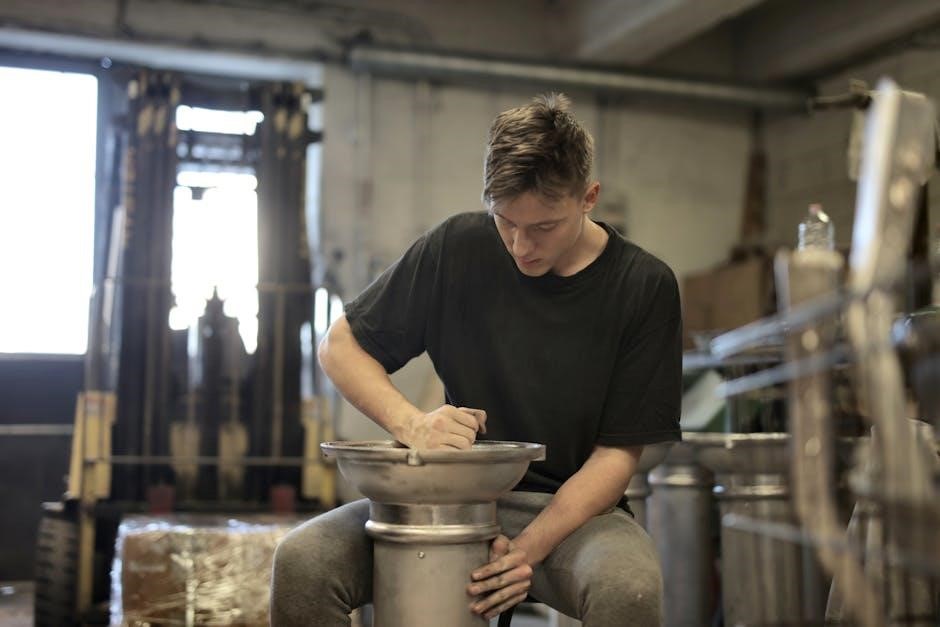
Limitations of Manual Moulding Machines
Manual machines suffer from lower production speeds‚ require significant labor‚ and are prone to inconsistencies due to operator variability during the injection process.
Lower Production Rates
Manual injection moulding machines inherently exhibit significantly lower production rates compared to their automated counterparts. This stems from the operator-dependent nature of each cycle – material loading‚ injection pressure application‚ and part ejection all require manual intervention. Consequently‚ cycle times are extended‚ limiting the volume of parts produced per hour. While suitable for prototyping or small batches‚ scaling up production with manual machines becomes economically unfeasible. The slower pace directly impacts overall manufacturing efficiency and responsiveness to market demands‚ making them less competitive for large-scale operations.
Higher Labor Requirements
Manual injection moulding machines necessitate a greater investment in labor compared to automated systems. Each production cycle demands direct operator involvement‚ from material preparation and loading to actively controlling the injection process and removing finished parts. This continuous manual operation increases labor costs and introduces potential for human error. Skilled operators are crucial for maintaining consistent quality‚ but reliance on manual effort limits scalability and increases operational expenses‚ particularly when considering shift work and training requirements.
Potential for Inconsistency
Manual injection moulding inherently carries a higher risk of inconsistencies in the final products. Variations in operator technique – injection speed‚ pressure‚ or cooling times – can lead to dimensional differences‚ weight fluctuations‚ and aesthetic imperfections. Unlike automated systems with precise controls‚ manual operation relies on human skill and judgment‚ introducing subjective elements. Maintaining uniform quality requires rigorous operator training and consistent adherence to procedures‚ yet subtle deviations can still occur‚ impacting product reliability and repeatability.
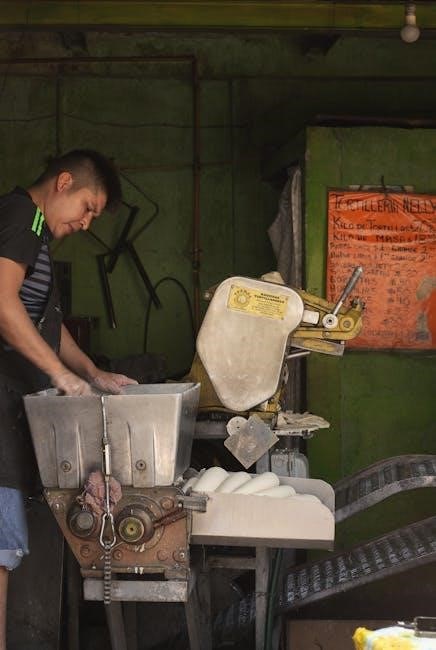
Comparison with Automated Injection Moulding
Manual machines contrast with semi and fully automatic systems‚ including servo-hydraulic and electric options‚ differing in production speed‚ labor needs‚ and precision.
Manual vs. Semi-Automatic
Manual injection moulding demands complete operator control throughout the entire process – from material loading and injection pressure to cooling and ejection. Conversely‚ semi-automatic machines introduce a degree of automation‚ typically handling functions like clamping or injection timing.
This reduces operator fatigue and improves consistency‚ though still requires manual intervention for material handling and cycle initiation. Semi-automatic systems represent a stepping stone towards full automation‚ offering a balance between cost-effectiveness and increased production efficiency compared to purely manual operations.
Manual vs. Fully Automatic
Fully automatic injection moulding machines represent a significant leap from manual operation‚ employing closed-loop control systems and automated material handling. These systems require minimal operator intervention‚ managing the entire moulding cycle – from material feed to part ejection – autonomously.
While manual machines prioritize affordability and customization for small runs‚ fully automatic systems excel in high-volume production‚ delivering consistent quality and reduced labor costs. The initial investment is substantially higher‚ but the increased efficiency often justifies the expense for larger-scale manufacturing.
Servo-Hydraulic and Electric Systems
Modern injection moulding technology increasingly incorporates servo-hydraulic and fully electric systems‚ representing advancements beyond traditional manual and hydraulic setups. Servo-hydraulic systems utilize servo valves for precise control of hydraulic fluid flow‚ enhancing energy efficiency and responsiveness.
Fully electric machines eliminate hydraulic systems altogether‚ relying on electric motors and ball screws for movement‚ offering even greater precision‚ cleanliness‚ and energy savings. These systems‚ while not directly applicable to manual machines‚ demonstrate the evolving landscape of injection moulding.
Safety Considerations When Operating Manual Machines
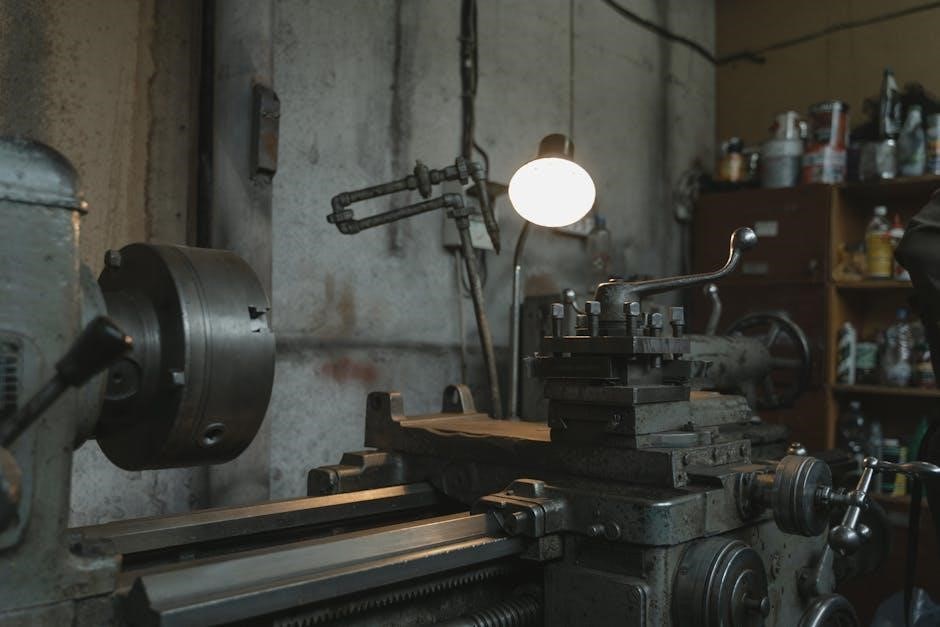
Prioritize safety with PPE‚ emergency stop knowledge‚ and machine guarding; manual machines require heightened awareness due to direct operator involvement and potential hazards.
Personal Protective Equipment (PPE)
Operating manual moulding machines necessitates diligent use of Personal Protective Equipment (PPE) to mitigate potential hazards. Safety glasses or face shields are crucial‚ protecting eyes from ejected materials or splashes. Heat-resistant gloves shield hands from hot moulds and plastic. Appropriate footwear prevents slips and protects against dropped objects. Hearing protection may be needed in noisy environments. Long sleeves and aprons offer skin protection from burns and chemical exposure. Regular inspection of PPE ensures its effectiveness‚ and proper training on its use is paramount for operator safety.
Emergency Stop Procedures
Immediate action is critical during emergencies with manual moulding machines. Familiarize yourself with the location of clearly marked emergency stop buttons – typically large‚ red‚ and easily accessible. Upon activation‚ the machine should halt instantly‚ cutting power to all moving parts. Never attempt to restart the machine until the issue is identified and resolved by qualified personnel. Report all incidents‚ regardless of severity. Regular drills reinforce these procedures‚ ensuring swift and safe responses. Knowing evacuation routes is also essential for overall safety.
Machine Guarding and Safety Features
Robust machine guarding is paramount for operator safety. Manual moulding machines should feature physical barriers preventing access to moving parts during operation. Interlocks automatically halt the machine if guards are removed. Light curtains provide an additional layer of protection‚ detecting intrusions. Regularly inspect guards for damage or wear‚ replacing them promptly. Ensure all safety features are functioning correctly before each use. Properly maintained guards minimize the risk of injuries‚ fostering a safe working environment.
Maintenance and Troubleshooting
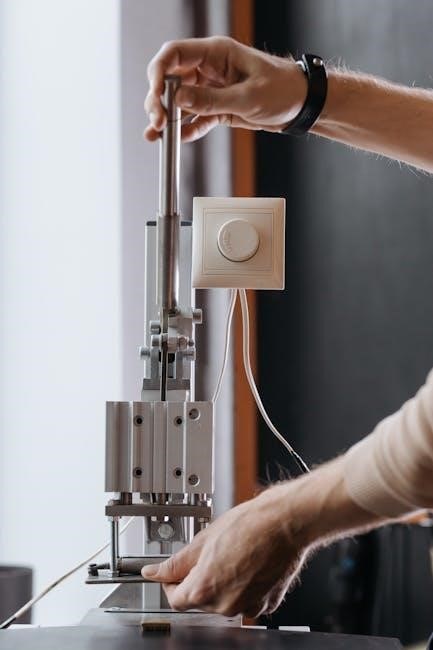
Regular maintenance—including hydraulic system checks—is crucial for optimal performance. Addressing common issues promptly minimizes downtime and extends the machine’s lifespan effectively.
Regular Maintenance Schedule
Establishing a consistent maintenance schedule is paramount for reliable operation of manual moulding machines. Daily checks should include inspecting hydraulic fluid levels and looking for leaks within the system. Weekly tasks involve cleaning the machine thoroughly‚ lubricating moving parts‚ and verifying the functionality of safety features like emergency stops.
Monthly inspections necessitate a deeper dive‚ examining the heating system for consistent temperature control and assessing the clamping unit for proper alignment. Quarterly‚ a professional should inspect the hydraulic system for wear and tear‚ replacing filters and hoses as needed. Annual overhauls should encompass a complete machine inspection and component replacement to ensure longevity.
Common Issues and Solutions
Several issues can arise with manual moulding machines. Inconsistent injection pressure often stems from air trapped in the hydraulic system – bleeding the system usually resolves this. Material flow problems may indicate insufficient heating; adjust temperature settings accordingly; Clamping force deficiencies can cause flash; tighten clamp settings or inspect for wear.
If the machine fails to cycle smoothly‚ check for obstructions in the injection unit. Overheating frequently points to a faulty temperature controller or failing heating elements. Regular maintenance‚ as outlined previously‚ proactively prevents many of these common problems‚ minimizing downtime.
Hydraulic System Maintenance
Maintaining the hydraulic system is crucial for manual moulding machine longevity. Regularly check the hydraulic fluid level and condition‚ replacing it according to the manufacturer’s schedule – typically every six to twelve months. Inspect hoses and fittings for leaks or damage‚ promptly addressing any issues. Filter replacement is vital to prevent contamination and maintain pressure.
Monitor pump performance for unusual noises or pressure drops. Bleeding air from the system is essential for consistent operation. Proper hydraulic maintenance ensures smooth‚ reliable machine function and minimizes costly repairs.
Future Trends in Manual Moulding Technology
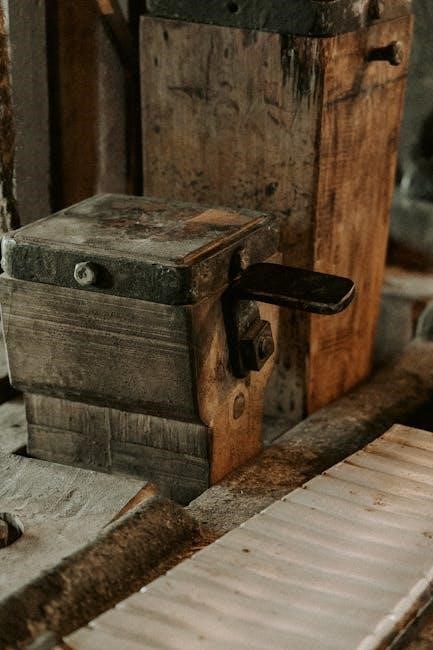
Emerging trends include integrating basic automation‚ enhancing ergonomics for improved user experience‚ and developing compact benchtop manual machines for specialized applications.
Integration with Basic Automation
While fundamentally manual‚ incorporating simple automated elements can significantly improve efficiency. This doesn’t necessitate full robotic systems‚ but rather additions like automated material feeders or basic cycle timers. Such integrations reduce operator fatigue and enhance consistency‚ bridging the gap towards semi-automation.
These enhancements can involve programmable logic controllers (PLCs) for precise control of specific functions‚ minimizing human intervention in repetitive tasks. This approach maintains the cost-effectiveness of manual machines while boosting productivity and reducing potential errors‚ extending their lifespan in modern manufacturing environments.
Improved Ergonomics and User Interface
Modernizing manual machines focuses increasingly on operator comfort and ease of use. This involves redesigning controls for intuitive operation‚ reducing physical strain during the injection process. Adjustable workstations and improved machine layouts minimize awkward postures and repetitive motions‚ enhancing operator well-being.
Clearer visual displays‚ providing real-time feedback on parameters like temperature and pressure‚ are also crucial. Simplified user interfaces‚ potentially incorporating touchscreen controls‚ streamline operation and reduce the learning curve for new operators‚ boosting overall efficiency and safety.
Benchtop and Small-Scale Manual Machines
The rise of benchtop manual injection moulding machines caters to prototyping‚ education‚ and very low-volume production. These compact units offer an accessible entry point for hobbyists‚ students‚ and small businesses. They are ideal for producing small plastic parts‚ samples‚ or customized components without the investment of larger machinery.
These machines often handle simpler moulds and materials‚ prioritizing affordability and ease of use. Variations include pneumatic and fully electric models‚ expanding application possibilities within constrained spaces and budgets.