The 2015 Jeep Wrangler embodies freedom, offering legendary off-road capability alongside open-air enjoyment. This manual details operation, maintenance, and safety features for optimal driving experiences.
Vehicle Overview
The 2015 Jeep Wrangler is a four-wheel drive vehicle designed for both on- and off-road adventures. Available in various trims – Sport, Sahara, Rubicon, and Willys Wheeler – each offers unique features and capabilities. The Wrangler distinguishes itself with its body-on-frame construction, solid axles, and available disconnecting sway bars, enhancing its off-road prowess.
This model year continues the tradition of removable doors and a fold-down windshield, providing an unparalleled open-air driving experience. Interior features include a user-friendly infotainment system, comfortable seating, and durable materials. Safety features are comprehensive, encompassing advanced airbag systems and electronic stability control. Understanding the Wrangler’s distinct characteristics is crucial for maximizing its potential and ensuring a safe and enjoyable ownership experience. This manual will guide you through all aspects of operating and maintaining your vehicle.
Key Features & Specifications
The 2015 Jeep Wrangler boasts a 3.6L Pentastar V6 engine, delivering 285 horsepower and 260 lb-ft of torque. Transmission options include a six-speed manual or a five-speed automatic. Available 4×4 systems offer varying levels of capability, from Command-Trac part-time 4WD to Rock-Trac with a 4:1 low-range gear ratio.

Key features encompass removable doors and a fold-down windshield, enhancing the open-air experience. Standard equipment includes air conditioning, power windows, and a sound system. Optional features range from upgraded audio systems to leather upholstery and navigation. Dimensions vary slightly by trim, but generally, the Wrangler offers ample cargo space and ground clearance. Fuel economy is rated at approximately 15 MPG city / 21 MPG highway. Understanding these specifications will help you appreciate the Wrangler’s capabilities.
Understanding Your Wrangler’s Systems
This section details the intricate workings of your Wrangler, covering the engine, transmission, 4×4 system, braking, and steering for informed operation and maintenance.
Engine & Performance
Your 2015 Jeep Wrangler is equipped with a 3.6L Pentastar V6 engine, delivering a balance of power and fuel efficiency. This engine produces 285 horsepower and 260 lb-ft of torque, providing ample capability for both on- and off-road adventures. Regular maintenance, as outlined in the scheduled maintenance section, is crucial for optimal performance.
Understanding the engine’s characteristics is key to maximizing its potential. The Pentastar V6 features variable valve timing (VVT) which optimizes engine performance across a wide range of speeds and loads. This technology contributes to improved fuel economy and reduced emissions. Break-in procedures, detailed in the initial operation section, are important for ensuring long engine life.
Pay attention to engine temperature and oil pressure gauges on the dashboard. Any unusual readings should be investigated promptly. Familiarize yourself with the engine’s normal operating sounds; any new or concerning noises warrant attention from a qualified technician. Proper engine care will ensure years of reliable service from your Wrangler.
Transmission
The 2015 Jeep Wrangler offers a choice of transmissions: a six-speed manual or a five-speed automatic. Both are designed to work seamlessly with the 3.6L Pentastar V6 engine, providing optimal power delivery and control. Understanding your chosen transmission’s operation is vital for a smooth driving experience.
The manual transmission requires precise clutch engagement and gear selection. Avoid “riding” the clutch, as this can lead to premature wear. The automatic transmission features a sophisticated control system that adapts to driving conditions; It includes features like Auto-Stick, allowing for some manual control.
Regularly check the transmission fluid level and condition, following the guidelines in the fluid checks section. Proper fluid maintenance is essential for preventing damage and ensuring smooth shifting. Be aware of any unusual noises or vibrations during gear changes, and address them promptly with a qualified service technician.
4×4 System Operation
The 2015 Jeep Wrangler’s 4×4 system is central to its legendary off-road capability. It offers several modes, selectable via the transfer case lever. Understanding these modes is crucial for maximizing performance in various terrains. Options typically include 2H (two-wheel drive high range), 4H (four-wheel drive high range), 4L (four-wheel drive low range), and Neutral.
4H is ideal for driving on slippery surfaces like snow or gravel, providing enhanced traction. 4L delivers maximum torque for challenging obstacles and steep inclines, but should only be used at low speeds. Always ensure the front and rear axles are engaged fully before attempting difficult terrain.
Avoid using 4×4 on dry pavement, as this can cause drivetrain binding and damage. Regularly inspect the transfer case and axles for leaks or damage. Refer to the maintenance section for recommended service intervals. Proper operation and maintenance ensure the longevity and reliability of your Wrangler’s 4×4 system.
Braking System
The 2015 Jeep Wrangler is equipped with a hydraulic braking system featuring disc brakes on all four wheels. This system incorporates Anti-lock Braking System (ABS) technology, designed to prevent wheel lockup during hard braking, enhancing steering control. Familiarize yourself with the ABS function; a pulsating sensation in the brake pedal indicates ABS is actively working.
Regularly inspect brake pads, rotors, and brake lines for wear and damage. Brake fluid levels should also be checked periodically and topped off as needed, using only the specified DOT 3 brake fluid. A decrease in braking performance, unusual noises, or a soft brake pedal are indicators of potential issues requiring immediate attention.
Proper brake maintenance is vital for safety. Schedule routine inspections and replacements as outlined in the maintenance section of this manual. Remember, responsive brakes are crucial for safe operation, especially during off-road adventures.
Steering System

The 2015 Jeep Wrangler utilizes a recirculating ball steering system, providing robust and reliable control. This system is designed to handle demanding terrains and off-road conditions. Power steering assists in reducing steering effort, making maneuvering easier. Be aware of the steering feel; any significant changes, such as increased stiffness or excessive play, should be investigated promptly.
Regularly inspect steering linkage and components for wear, damage, or looseness. Check the power steering fluid level and ensure it’s within the specified range, using the recommended fluid type. Unusual noises while steering, such as groaning or squealing, can indicate a problem with the power steering pump or related components.
Maintaining the steering system is crucial for vehicle control and safety. Adhere to the scheduled maintenance intervals outlined in this manual for inspections and necessary adjustments. A properly maintained steering system ensures a confident and responsive driving experience.

Operating Your 2015 Jeep Wrangler
Mastering your Wrangler involves understanding its unique controls and capabilities. This section details starting, driving modes, gear shifting, and interpreting dashboard indicators for safe operation.
Starting & Stopping the Engine
Starting your 2015 Jeep Wrangler is a straightforward process. Ensure the parking brake is engaged, and the gear selector is in Park or Neutral. Insert the key into the ignition and turn it to the “Start” position, holding it until the engine cranks and runs. For vehicles equipped with a Keyless Entry System, simply press the brake pedal while pressing the Start/Stop button.
Allowing the engine to warm up briefly before driving is recommended, especially in cold weather. To stop the engine, shift the gear selector into Park and turn the ignition key to the “Off” position, or press the Start/Stop button. Avoid abruptly shutting off the engine, as this can potentially damage components. Always remove the key from the ignition when leaving the vehicle to prevent accidental operation. Be mindful of surroundings before starting or stopping the engine, ensuring it’s safe to do so. Familiarize yourself with the engine’s normal operating sounds to quickly identify any unusual noises.
Driving Modes & Capabilities
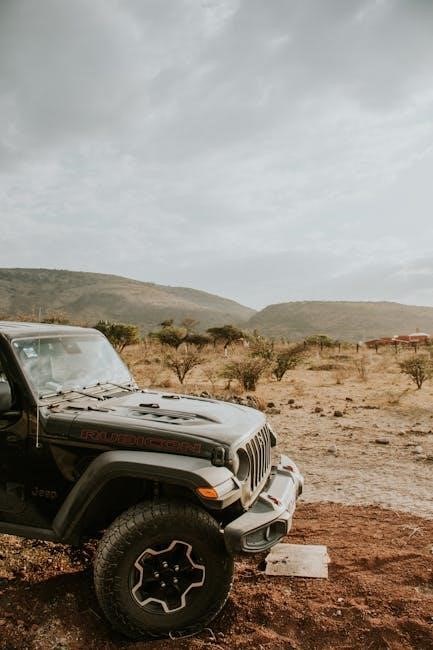
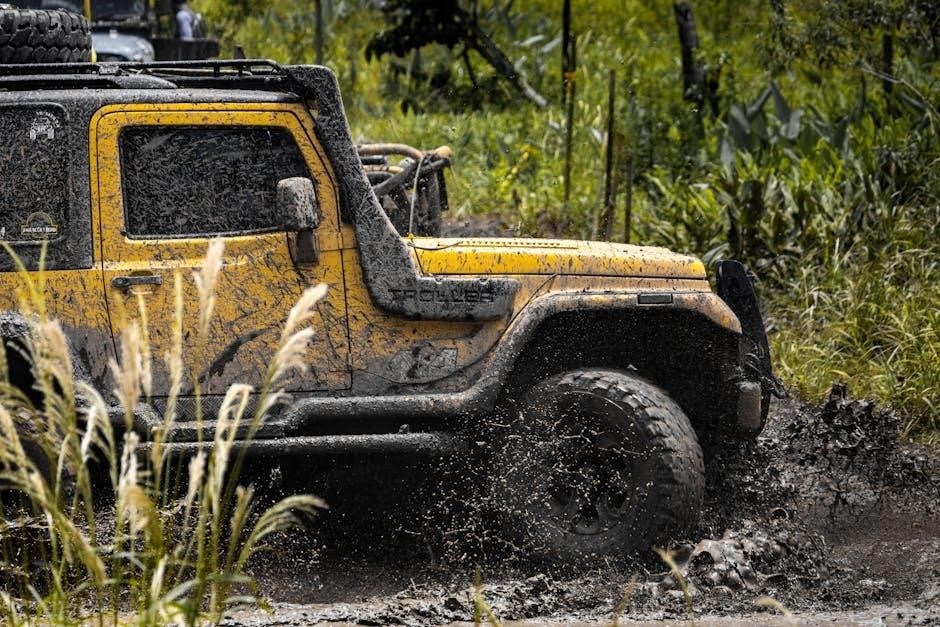
The 2015 Jeep Wrangler excels in diverse terrains, offering remarkable driving modes and capabilities. Standard models feature a rear-wheel drive (2WD) mode for efficient on-road travel. Engaging the 4-High mode provides increased traction for challenging conditions like snow or gravel. For severe off-road situations, utilize the 4-Low mode, delivering maximum torque and control.
Understanding these modes is crucial for optimal performance. 4-High is suitable for sustained off-road driving at moderate speeds, while 4-Low is best for slow, technical maneuvers. The Wrangler’s solid axles and high ground clearance contribute to its exceptional off-road prowess. Remember to disengage the 4WD system when driving on dry pavement to prevent drivetrain damage and optimize fuel efficiency. Always assess the terrain before selecting a driving mode, and drive responsibly, respecting the vehicle’s limitations and environmental conditions.
Using the Gear Shift
The 2015 Jeep Wrangler offers both manual and automatic transmission options. For manual transmissions, depress the clutch pedal fully before shifting gears. The shift pattern is clearly indicated on the shift knob. Ensure smooth and complete gear engagement to avoid grinding. Automatic transmissions feature a straightforward PRNDL configuration.
‘P’ stands for Park, locking the transmission. ‘R’ is for Reverse, ‘N’ for Neutral, allowing the vehicle to roll freely. ‘D’ is Drive for forward motion, and ‘L’ provides low gear for steep descents or increased engine braking. Avoid shifting into Park while the vehicle is in motion. When shifting between Drive and Reverse, come to a complete stop. Familiarize yourself with the gear shift’s operation before driving, and always maintain control of the vehicle. Proper gear selection enhances driving safety and optimizes fuel efficiency.
Understanding Dashboard Lights & Indicators
The 2015 Jeep Wrangler’s instrument cluster displays crucial vehicle information via various lights and indicators. A solid illumination generally signifies a system is active, while a flashing light often indicates a potential issue. The Check Engine light signals a problem with the engine or emissions system – consult a technician. The ABS light indicates an issue with the Anti-lock Braking System.
The Airbag light monitors the Supplemental Restraint System. A low Fuel level is indicated by a corresponding symbol. The Oil Pressure light warns of insufficient oil pressure, requiring immediate attention. The Battery light signifies a charging system malfunction. Familiarize yourself with all indicator meanings in this manual. Ignoring warning lights can lead to more significant damage. Regularly check the dashboard for any illuminated indicators and address them promptly to ensure safe operation.

Maintenance & Care
Regular maintenance is crucial for your 2015 Wrangler’s longevity and performance. Following the scheduled maintenance plan ensures optimal operation and prevents costly repairs.
Scheduled Maintenance
Maintaining your 2015 Jeep Wrangler according to the recommended schedule is vital for its reliability and longevity. This schedule, detailed in your vehicle’s service booklet, outlines specific inspections, fluid changes, and component replacements at defined mileage intervals.
Key services include oil and filter changes, tire rotations, brake inspections, and fluid level checks (coolant, transmission, power steering, brake fluid, and windshield washer fluid). More extensive services, such as spark plug replacement, belt and hose inspections, and differential fluid changes, are required less frequently, typically at higher mileage milestones.
Adhering to the schedule helps prevent unexpected breakdowns, ensures optimal performance, and maintains your Wrangler’s resale value. Keep detailed records of all maintenance performed, including dates, mileage, and services completed. Utilizing a qualified Jeep service technician is highly recommended to ensure proper procedures and genuine parts are used. Ignoring scheduled maintenance can lead to premature wear, reduced fuel efficiency, and potentially costly repairs down the road.
Fluid Checks & Replacements
Regularly checking and replenishing your 2015 Jeep Wrangler’s fluids is crucial for smooth operation and preventing component damage. Key fluids include engine oil, coolant, brake fluid, power steering fluid, transmission fluid, windshield washer fluid, and differential fluids.
Inspect fluid levels using the dipsticks or reservoir markings, ensuring they fall within the recommended ranges. Low fluid levels can indicate leaks or increased consumption, requiring further investigation. Replacement intervals vary depending on driving conditions and fluid type; consult your owner’s manual for specific recommendations.
Using the correct fluid type is paramount; incorrect fluids can cause internal damage. Properly dispose of used fluids at designated recycling centers. Regularly flushing and replacing fluids, like coolant and brake fluid, removes contaminants and maintains optimal performance; Neglecting fluid maintenance can lead to overheating, reduced braking efficiency, and costly repairs.
Tire Information & Maintenance
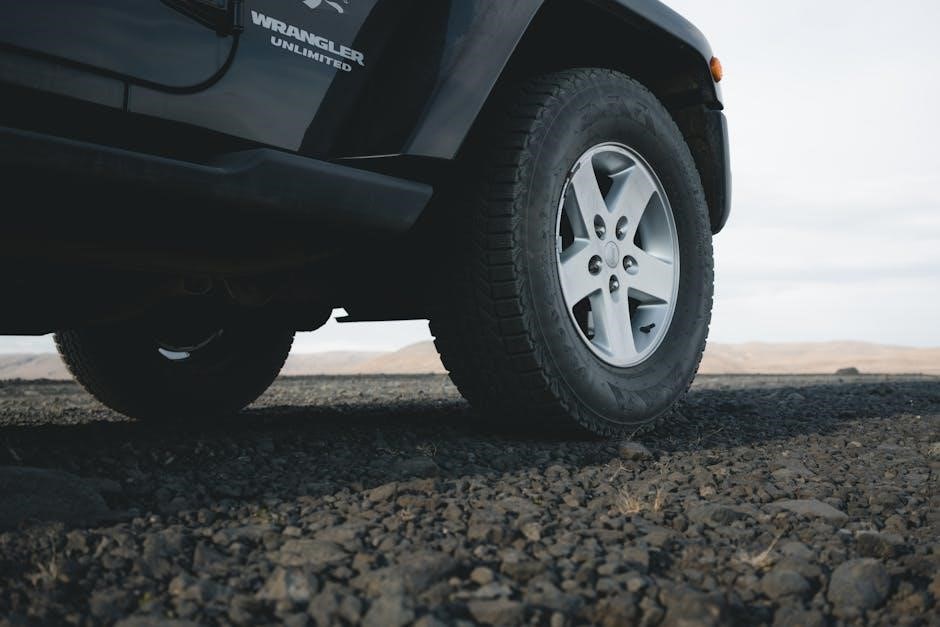
Maintaining proper tire condition is vital for your 2015 Jeep Wrangler’s safety, handling, and fuel efficiency. Regularly inspect tires for wear, damage (cuts, bulges), and correct inflation pressure. Refer to the tire placard (usually located on the driver’s side doorjamb) for recommended pressure – do not exceed the maximum pressure listed on the tire sidewall.
Uneven wear patterns indicate alignment issues or suspension problems that require attention. Rotate tires according to the schedule in your owner’s manual (typically every 5,000-8,000 miles) to promote even wear. Check tire tread depth using a tread depth gauge; replace tires when they reach the minimum legal tread depth.
Inspect tires for embedded objects and remove them promptly. Be mindful of tire age; even with sufficient tread, tires degrade over time. Consider replacement after six years, regardless of mileage. Proper tire maintenance enhances off-road performance and extends tire lifespan.
Battery Maintenance
Your 2015 Jeep Wrangler’s battery is crucial for reliable starting and electrical system operation. Regularly inspect the battery terminals for corrosion; clean them with a baking soda and water solution if necessary, ensuring the vehicle is off. Securely tighten all connections. Check the battery’s state of charge periodically, especially during periods of infrequent use or cold weather.
Avoid leaving lights or accessories on when the engine is off, as this can drain the battery. Prolonged inactivity can lead to battery discharge; consider using a battery tender or trickle charger if the vehicle will be stored for an extended period. A failing battery may exhibit slow engine cranking or dim headlights.
Have the battery tested periodically by a qualified technician to assess its health and remaining capacity. Proper battery maintenance ensures dependable starting and prevents unexpected electrical issues, particularly important for off-road adventures.

Safety Features & Operation
This section details the 2015 Wrangler’s safety systems – airbags, seatbelts, stability control, and emergency assistance – ensuring occupant protection during all driving conditions.
Airbag System
Your 2015 Jeep Wrangler is equipped with an advanced airbag system designed to provide supplemental protection in the event of a collision. This system includes front airbags for both driver and passenger, as well as side-curtain airbags for enhanced protection during side impacts. The side-curtain airbags deploy from the headliner and offer head protection for outboard occupants in both the front and rear seats.
It’s crucial to understand that airbags are designed to work in conjunction with seatbelts, not as a replacement for them. Airbags deploy with significant force, and proper seatbelt usage is essential to minimize the risk of injury. The system includes sensors that detect the severity of a collision and deploy the airbags accordingly. Factors like seat occupancy and impact speed influence deployment.
Never place rear-facing child seats in the front passenger seat if the airbag is not deactivated. Always refer to the child restraint system’s instructions and the vehicle’s safety guidelines for proper installation. A warning light on the instrument panel will illuminate if there’s a malfunction in the airbag system; have it inspected by a qualified technician immediately.
Seat Belts & Child Restraints
Proper seat belt usage is the most effective safety measure in your 2015 Jeep Wrangler. All occupants should wear properly adjusted seat belts at all times, regardless of seating position. Seat belts help secure passengers during collisions, reducing the risk of injury. Ensure the lap belt lies snugly across the hips, and the shoulder belt crosses the chest and collarbone.
Child restraints are vital for protecting young passengers. Always follow the manufacturer’s instructions for installing and using child safety seats. The Wrangler provides LATCH (Lower Anchors and Tethers for Children) anchors for easier installation. Children should remain in rear-facing restraints as long as possible, within the manufacturer’s height and weight limits.
Never place a rear-facing infant seat in front of an active airbag. Consult the vehicle’s owner’s manual and the child restraint’s instructions for specific guidance. Regularly inspect seat belts and child restraints for damage or wear, and replace them if necessary. Prioritize safety and ensure all passengers are properly restrained before each journey.
Electronic Stability Control
Electronic Stability Control (ESC) is a crucial safety system in your 2015 Jeep Wrangler, designed to assist in maintaining control during challenging driving conditions. ESC monitors steering input and vehicle direction, automatically applying brakes to individual wheels to correct oversteer or understeer. This helps prevent skidding and loss of control, particularly on slippery surfaces or during sudden maneuvers.
The ESC system is typically indicated by a flashing amber light on the instrument panel when activated. While ESC enhances stability, it’s not a substitute for careful driving. Always adjust your speed and driving style to suit road and weather conditions.
Understand that ESC has limitations; it cannot overcome the laws of physics. Excessive speed or improper tire inflation can reduce its effectiveness. The system can be temporarily disabled with a button, but it automatically re-engages upon restarting the vehicle. Prioritize safe driving practices and allow ESC to assist when needed for optimal vehicle control.
Emergency Assistance Features
Your 2015 Jeep Wrangler is equipped with features designed to provide assistance in emergency situations. The Uconnect system, if equipped, may include an emergency call button that connects you directly to emergency services. This feature utilizes GPS technology to pinpoint your vehicle’s location, facilitating a faster response.
Additionally, the Wrangler incorporates standard safety features like airbags and seatbelts, crucial for occupant protection during a collision. Familiarize yourself with the location of the first-aid kit (if equipped) and the hazard light switch. Knowing how to activate these quickly can be vital.
Remember to keep your Uconnect system updated to ensure optimal functionality of emergency features. Regularly check the operation of all safety systems. In any emergency, prioritize your safety and the safety of others, and follow the instructions of emergency personnel.
Detailed Component Information
This section provides in-depth explanations of your Wrangler’s components, including the wiper, lighting, audio, and climate control systems, for comprehensive understanding.
Wiper & Washer System
Your 2015 Jeep Wrangler’s wiper and washer system is designed for optimal visibility in various weather conditions. The system features multiple settings, controlled by a stalk located on the steering column. These settings include Off, Intermittent, Low, and High. The intermittent setting allows you to adjust the wiping frequency to suit light rain or mist.
To activate the windshield washers, pull the stalk towards you. Simultaneously pressing the stalk will activate the windshield wipers. For heavier precipitation, use the High setting for continuous wiping. The rear window wiper operates independently, controlled by a separate switch, ensuring clear visibility through the rear window.
Washer fluid reservoir is located under the hood and should be checked regularly. Low washer fluid levels will reduce the effectiveness of the system. Ensure you use a winter-formulated washer fluid in colder climates to prevent freezing. Proper maintenance of this system is crucial for safe driving.
Lighting System
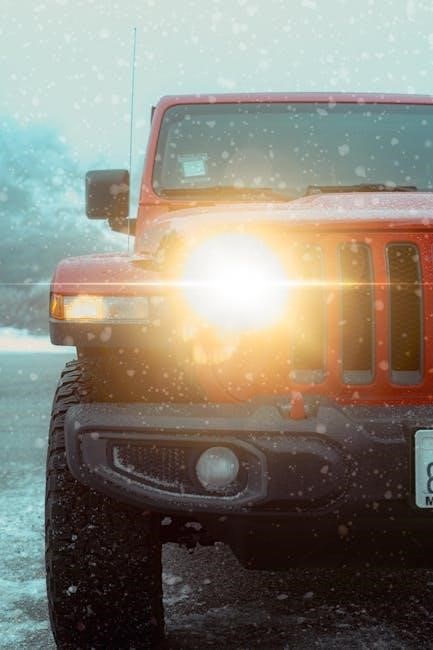
The 2015 Jeep Wrangler’s lighting system provides illumination for safe driving in diverse conditions. Headlights, controlled by a switch on the instrument panel or an automatic setting, offer low and high beam options. Daytime Running Lights (DRL) enhance visibility during daylight hours. Fog lights, activated separately, improve visibility in foggy or inclement weather.
Interior lighting includes dome lights, map lights, and cargo area lights, all controlled by individual switches. The hazard warning flashers, activated by a red triangle button, alert other drivers to a potential hazard. Ensure all exterior lights are functioning correctly before each drive.
Bulb replacement procedures are detailed in the maintenance section of this manual. Using the correct bulb type is essential for optimal performance and to avoid damaging the lighting system. Regularly inspect the lenses for cracks or damage, and replace them as needed to maintain clear illumination.
Audio System
The 2015 Jeep Wrangler’s audio system delivers entertainment and information during your journeys. The system features an AM/FM radio, a CD player, and an auxiliary input jack for connecting external devices. Higher trim levels may include a USB port for media playback and smartphone integration. Volume, tuning, and track selection are controlled via buttons and a rotary knob on the radio faceplate.
Sound quality can be adjusted using the bass, mid, and treble controls. Steering wheel-mounted audio controls, if equipped, allow for convenient operation without taking your hands off the wheel. The system may also feature Bluetooth connectivity for wireless audio streaming and hands-free calling.
Troubleshooting common audio issues, such as no sound or poor reception, is covered in the troubleshooting section. Refer to the system’s user guide for detailed instructions on utilizing all features and maximizing your listening experience.
Climate Control System
The 2015 Jeep Wrangler’s climate control system provides heating, ventilation, and air conditioning for passenger comfort. Manual systems feature rotary dials for temperature and fan speed adjustment, alongside mode selection levers for directing airflow. Automatic climate control, available on select trims, maintains a set temperature automatically.
Operation involves selecting the desired temperature, fan speed, and airflow mode (e.g., defrost, floor, vent). The recirculation button allows for faster cooling or heating by recirculating cabin air; Understanding these controls ensures optimal comfort in various weather conditions.
Maintenance includes regularly checking and replacing the cabin air filter to maintain air quality and system efficiency. Proper use of the climate control system, alongside regular maintenance, will ensure years of reliable operation. Refer to the maintenance schedule for filter replacement intervals.